In the Presence of the Altar of God
The Divine Liturgy

“For where two or three are gathered in my name, there am I with them.”
Matthew 18:20
The Divine Liturgy is at the heart of worship in the Coptic Orthodox Church. It is not simply a church service, but a sacred participation in the life of Christ, culminating in the
Holy Eucharist—the Body and Blood of our Lord Jesus Christ.
The Liturgy is filled with Scripture, prayer, incense, hymns, and ancient traditions that draw our hearts toward God. Although the service may initially feel unfamiliar to visitors, every part has meaning and purpose.
The Liturgy at a Glance
-
The priest selects the Lamb—the loaf of bread that will be consecrated as the Body of Christ. The bread and wine are blessed and prepared for the Eucharistic celebration.
-
The congregation listens to readings from Holy Scripture. These ordinarily include readings from the Pauline Epistles, Catholic Epistles, Acts, Synaxarium, Psalm, and Holy Gospel. Through the readings and sermon, we hear the Word of God and prepare our hearts for the Eucharist.
-
Before approaching the Holy Mysteries, the Church remembers the reconciliation accomplished through Jesus Christ. We are called to approach God—and one another—with hearts of peace, repentance, and love.
-
The Eucharistic prayer begins as the priest calls the congregation to lift up their hearts to the Lord. Together with the heavenly hosts, the Church offers praise and thanksgiving to God.
-
The congregation joins the worship of heaven, proclaiming:
“Holy, Holy, Holy, Lord of Hosts; heaven and earth are full of Your holy glory.”
This reminds us that in the Liturgy, our earthly worship is united with the worship of heaven.
-
The priest recalls the words of Christ at the Last Supper: “Take, eat; this is My Body” and “Drink of it, all of you; for this is My Blood.” Through the Eucharistic prayers and the work of the Holy Spirit, the bread and wine become the true Body and Blood of Christ.
-
The Church prays for the peace of the Church, the fathers of the Church, the clergy, mercy, the salvation of the world, the waters or crops according to the season, and the offerings.
-
We remember the Virgin Mary, the apostles, martyrs, saints, and all those who have faithfully departed. This expresses the unity of the Church on earth with the Church in heaven.
-
The priest breaks the consecrated Body of Christ while offering prayers of thanksgiving and supplication. The congregation prepares through repentance and prayer to receive Holy Communion.
-
Before Communion, the priest publicly confesses the Church's faith that the Eucharist is truly the life-giving Body of Jesus Christ, given for the remission of sins and eternal life.
-
Prepared Orthodox Christians receive the Holy Body and Precious Blood of Christ. Communion is the culmination of the Divine Liturgy and the deepest expression of our union with Christ and His Church.
-
Following Communion and thanksgiving, the priest blesses the congregation and sends the faithful back into the world to live the faith they have celebrated.
Other Frequently Asked Questions
-
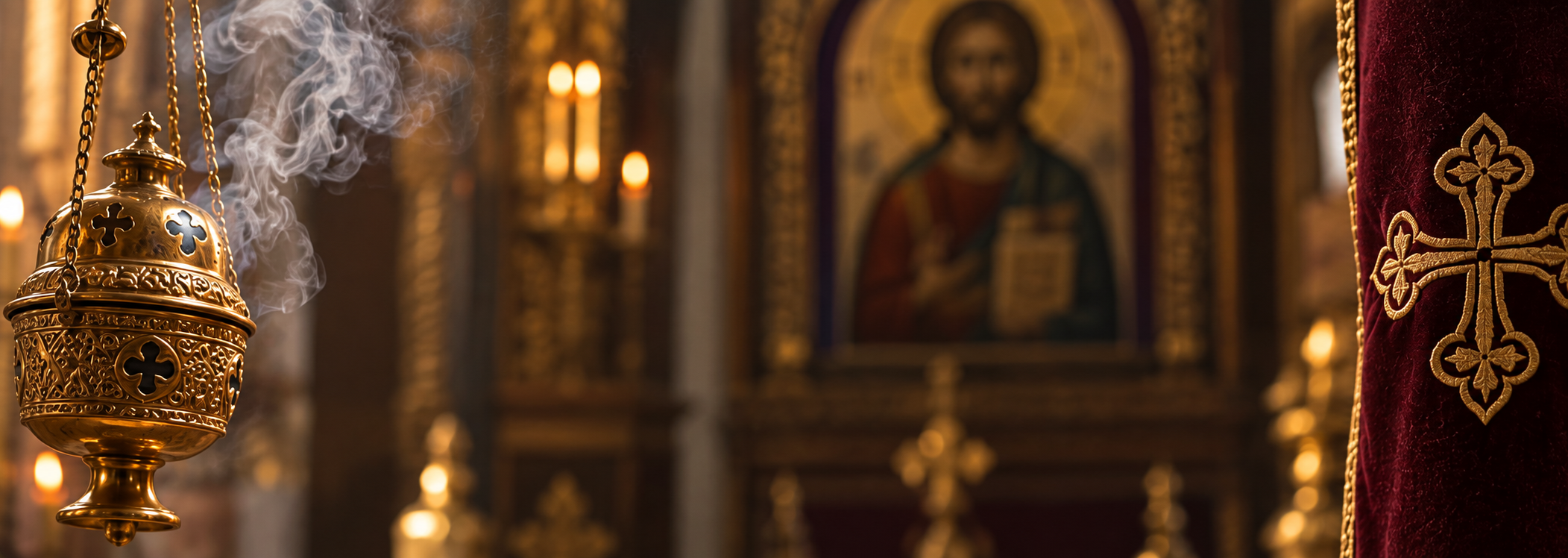
You will notice incense used throughout Coptic worship. Incense represents our prayers rising before God and reminds us of His holy presence.
“May my prayer be set before you like incense; may the lifting up of my hands be like the evening sacrifice.”
Psalm 141:2 -
Coptic worship involves the whole person. We stand for much of the Liturgy as a sign of reverence, attentiveness, and participation. There are also times for bowing, making the sign of the Cross, and responding together in prayer.
Visitors shouldn't worry about knowing exactly when to stand, sit, bow, or respond. You are welcome to simply observe and follow the congregation.
-
Visitors are warmly welcome to attend the Divine Liturgy. However, because Holy Communion expresses full unity in the Orthodox faith and sacramental life of the Church, Eucharistic Communion is ordinarily reserved for baptized and chrismated Orthodox Christians who are properly prepared to receive.
If you are unsure whether you should receive Communion, please speak with one of our priests before the service.
-
In the Coptic Orthodox Church, women traditionally cover their heads during prayer as a sign of reverence, humility, and respect for God, following the teachings of St. Paul in 1 Corinthians 11. This practice reflects devotion and the sacredness of worship.
-
In the Coptic Orthodox Church, men and women traditionally sit on separate sides to encourage modesty, reverence, and freedom from distractions during worship. This ancient tradition helps everyone focus on prayer and reflects the sacredness of the Divine Liturgy.